
What Your Symptoms Are Actually Trying to Tell You

Posted by Dr. Michele Renee | Body Luminary
When a plant isn't thriving, we don't blame the plant.
We don't tell it to push through. We don't question its motivation or wonder if it's being dramatic. We look at it — really look at it — and we ask: what does this plant need that it isn't getting? Is the soil depleted? Is it getting too much sun, or not enough? Is something in the environment making it impossible to do what it's perfectly designed to do?
We get curious. We look for information. We adjust the conditions.
And then — almost always — the plant responds.
I've been thinking about this for years, and I keep coming back to the same question: why don't we offer ourselves the same compassion?
The story we've been told about symptoms
Most of us were raised in a medical culture that treats the body more like a machine than a living thing. Machines malfunction. Machines have broken parts. When a machine acts up, you find the error and you fix it, or you override it, or you push through until you can get it looked at.
This is such a different orientation than gardening.
And I think it's costing us something enormous — because it means we walk through our lives treating our symptoms as evidence of malfunction. As problems to be solved, silenced, or conquered. As things that are happening to us, that we need to fight our way back from.
What if that framing is exactly backwards?

Your symptoms are not a malfunction. They are a message.
Here's what I've come to understand after years of clinical practice and integrative care education: your body, like a plant, is constantly responding to its conditions.
A plant that is dropping its leaves in a dry environment isn't failing. It is doing something extraordinarily intelligent — conserving moisture, reducing its surface area, protecting its core. Remove the leaf that looks like the problem, and the plant will drop another one, because the conditions haven't changed.
Your body does something very similar.
Fatigue isn't your body being dramatic. It's your body doing what a plant does in drought — conserving resources, enforcing rest, redirecting energy to the systems that most need it. Pain isn't proof that something is permanently broken. It's a signal — sometimes a very loud one — drawing your attention to a place that needs more care. Brain fog isn't a character flaw. It's often a nervous system that has been running in survival conditions for so long that it simply doesn't have the resources left for higher-order function.
The symptoms are not the problem. They are the plant's way of showing you where the conditions need to change.
What our symptoms are often trying to say
I want to be careful here, because I'm not suggesting symptoms don't need medical attention — they absolutely do, and understanding them works best alongside good care, not instead of it. But I've noticed some patterns worth naming.
When fatigue keeps returning no matter how much you rest: Think about a plant in depleted soil. You can water it faithfully, give it perfect light, keep it at the ideal temperature — but if the soil doesn't have what it needs, the plant will keep struggling. For your body, that depleted soil is often a nervous system that hasn't experienced enough felt safety to truly restore. The fatigue isn't laziness or weakness. It's a root system asking for different conditions.
When your digestion is constantly unpredictable: The gut and the nervous system are in near-constant conversation — more signals travel from gut to brain than the other way around. Think of digestion as one of the most sensitive indicators in the garden. When the environment is stressful, uncertain, or unsafe, the digestive system is often the first to reflect it. The question isn't just what are you eating? but what does your nervous system believe is safe enough to digest right now?
When symptoms shift and change and never quite fit a clean diagnosis: This one is particularly hard, because it can feel like being gaslit by your own body. But imagine a plant that keeps sending up new shoots in unexpected places — not because it's broken, but because it's determined to find its way toward the light, whatever direction it can. A system under chronic stress will route its distress signal through whatever channel is available. The message keeps trying to get through. It just keeps finding new paths until someone finally understands what it's saying.
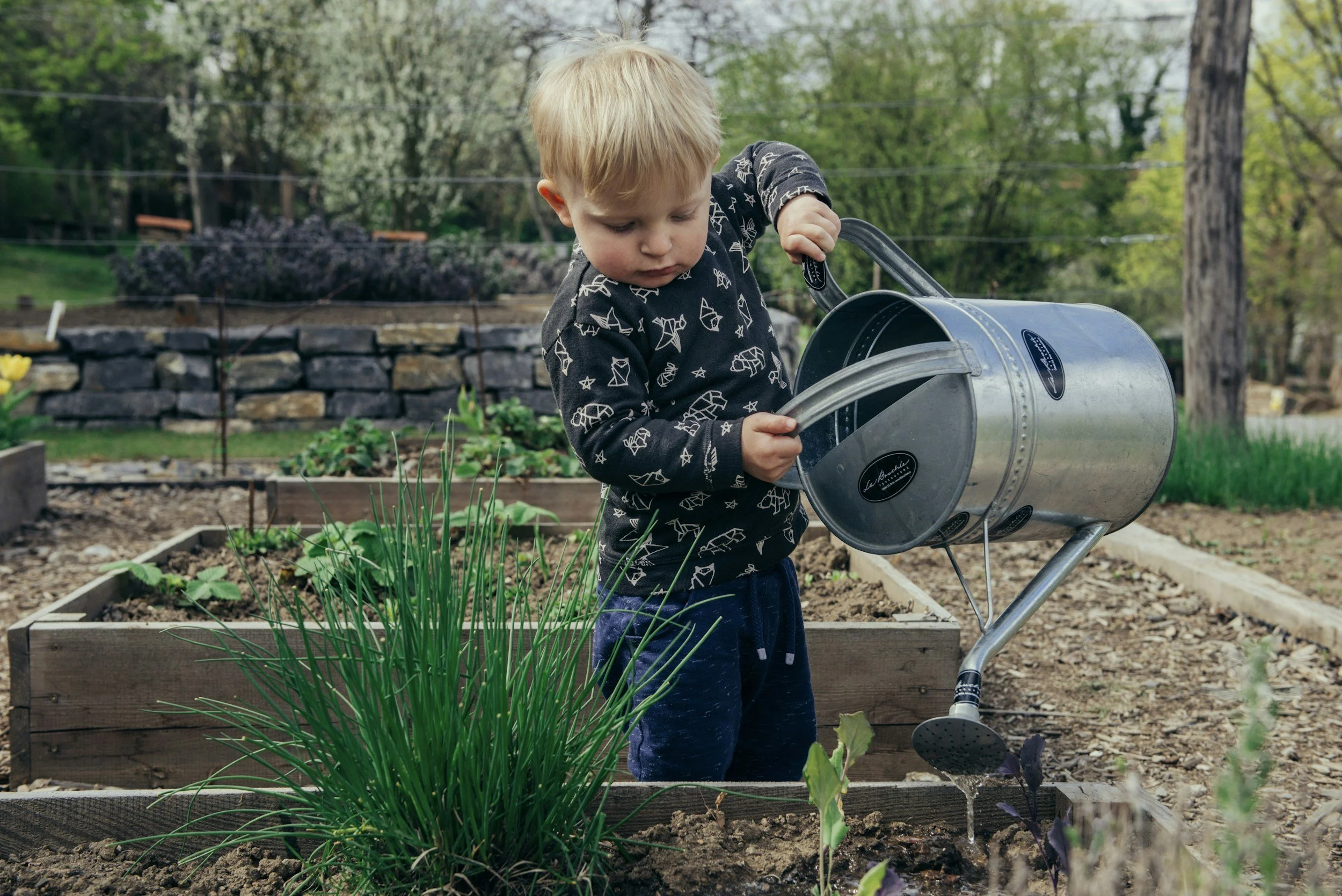
Getting curious instead of afraid
A gardener who is paying attention doesn't panic when a leaf yellows. They get curious. They ask what changed. They look at the whole plant, not just the symptomatic leaf — because they know that what shows up in one place usually reflects something happening throughout the whole system.
I know that kind of curiosity is genuinely hard when you've been living with symptoms for a long time. When you've had your experience minimized or dismissed. When you're exhausted and in pain and you just want it to stop. Fear is a completely reasonable response to a body that feels unpredictable. I'm not asking you to bypass that.
But I am inviting you to wonder, just a little, the way a gardener does.
Here's a practice I come back to often. When a symptom shows up — not in a crisis moment, but in a quiet one — I ask:
If this symptom could speak, what would it say?
Not to diagnose. Not to fix. Just to listen. To be curious about the conditions, rather than afraid of the leaf.
You might be surprised what comes up when you offer your body that kind of attention.
Sometimes the answer is practical: I'm running in depleted soil and I need actual rest, not just lying down while worrying. Sometimes it's relational: I've been holding something I haven't had space to express. Sometimes it's about meaning: I've been growing in a direction that doesn't feel like mine.
None of these answers are failures. They're information about conditions. And adjusting conditions is where tending begins.
The TENDing Method and the T that starts everything
The T in TENDing stands for Tune In — and it's first for a reason.
You cannot tend a garden you haven't actually looked at. You can throw fertilizer at depleted soil without knowing what's missing. You can water a root-bound plant without realizing it needs more space. The interventions mean so much more — they land so much more fully — when they're informed by actually paying attention to what the plant in front of you is doing and why.
Tuning in to your body is the same. It means learning to read your symptoms as information rather than indictments. It means approaching your own experience with the same patient curiosity a good gardener brings to a struggling plant — not blame, not frustration at the plant for failing to perform, but genuine interest in what the conditions are doing and what might need to shift.
You are a living thing. You respond to conditions. And the most important condition of all — the one that makes everything else more possible — is being truly seen and tended by someone who understands how living things actually work.

A gentle place to begin
If this resonated with you — if you found yourself nodding, or tearing up a little, or thinking finally, someone said it — I want you to know that you're not alone. I hear this every week. And I built TENDing Foundations because I believe people deserve care that tends the whole system, not just the symptomatic leaf.
Our next cohort opens May 12, 2026. Six weeks, virtual, small group, trauma-informed. Founding member pricing is $1,297, down from the standard $2,997. Details are [here].
And if you're not ready yet — that's completely okay. You can stay here, keep reading, keep tending. We'll be back.
You've been listening to everyone else's explanation of your body for long enough.
What if it's finally time to tend the conditions instead?
🌿
Dr. Michele Renee is a chiropractor, acupuncturist, and founder of Body Luminary, and Associate Professor and Director of Integrative Care at Northwestern Health Sciences University. The TENDing Method was co-developed with Dr. Brenna Erickson, DC.